


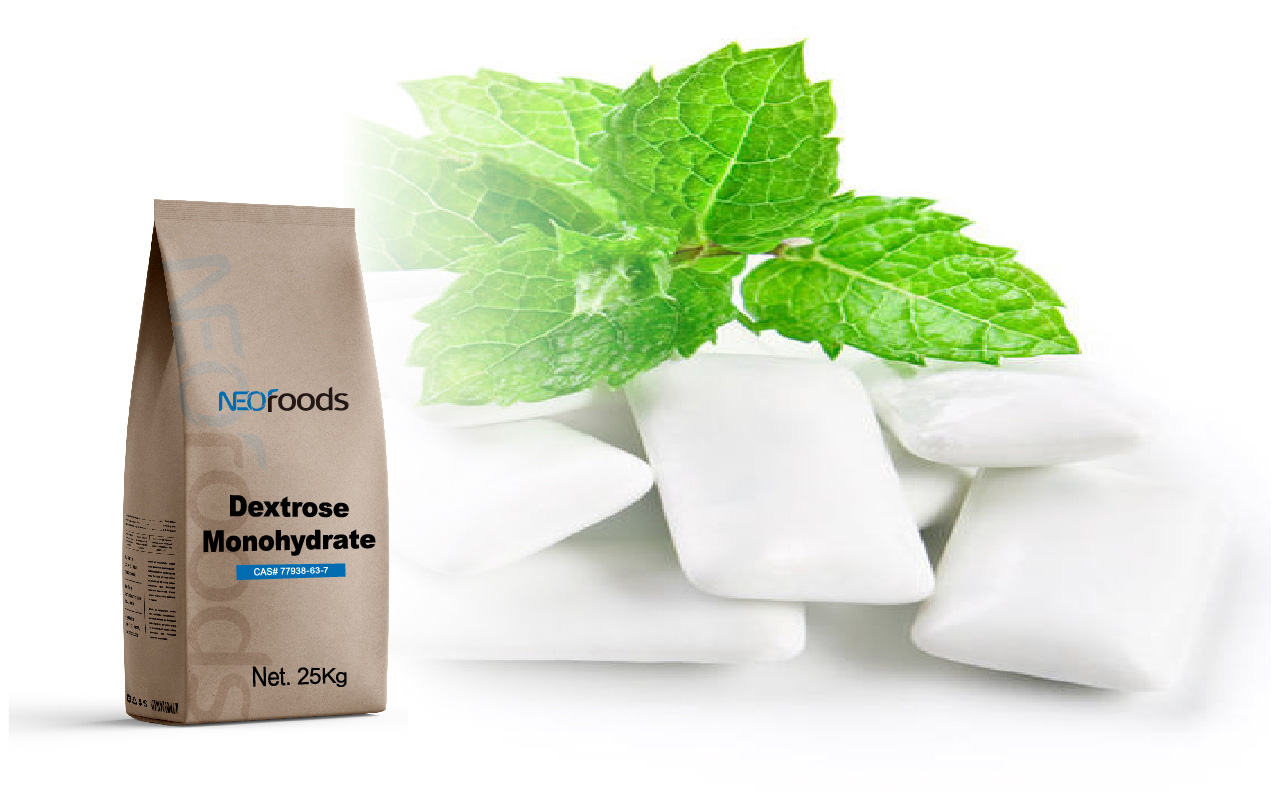
In the food, nutrition, and pharmaceutical industries, dextrose monohydrate and glucose often appear together on ingredient lists, product specifications, and technical documents. This has led many buyers, formulators, and end users to assume that the two are completely identical. However, in practical applications, dextrose monohydrate vs glucose does show meaningful differences in physical form, stability, and suitability for different uses. Understanding these differences helps companies make more informed decisions in product development, cost control, and raw material selection.
What Is Glucose?
Glucose is a naturally occurring monosaccharide and the most fundamental energy source for the human body. It plays a central role in carbohydrate metabolism and is transported through the bloodstream to supply energy to cells, which is why it is commonly referred to as “blood sugar.”
In industrial and commercial contexts, glucose is a broad term rather than a single, fixed product. Depending on processing methods and end-use requirements, glucose can exist in several forms:
● Anhydrous glucose: Produced through further dehydration, offering a higher glucose content but is more hygroscopic (moisture-absorbing), requiring stringent packaging and low-humidity storage to prevent caking.
● Dextrose monohydrate: A crystalline form containing water of crystallization, widely used as a solid glucose source.
● Glucose solutions or syrups: Commonly applied in beverages, fermentation, and liquid formulations.
When discussing dextrose monohydrate vs glucose, it is important to recognize that glucose refers to a category, while dextrose monohydrate is a specific form within that category.
What Is Dextrose Monohydrate?
Dextrose monohydrate is the purified and crystallized form of glucose, typically obtained from the hydrolysis of starch followed by controlled crystallization.Chemically, it is still D-glucose, but each glucose molecule is associated with one molecule of water in its crystal structure.
Key characteristics include:
● Chemical formula: C₆H₁₂O₆·H₂O, indicating the presence of water of crystallization.
● Appearance: White crystalline powder with uniform particle size and good flowability.
● High physical and chemical stability: Resistant to degradation under normal storage conditions.
● Wide applicability: Commonly used in food, pharmaceutical, and nutritional applications and compliant with multiple international standards.
From a technical standpoint, dextrose monohydrate is not a different sugar, but rather the most commonly adopted industrial form of glucose.
Key Differences Between Dextrose Monohydrate vs Glucose
When comparing dextrose monohydrate vs glucose, the most relevant differences are related to form and handling rather than nutritional function or sweetness.
1. Chemical Structure
● Glucose: Refers to the glucose molecule itself, without specifying hydration state.
● Dextrose monohydrate: Glucose combined with one molecule of water in a crystalline structure.
This structural difference does not change glucose’s biological role but does affect crystallization behavior and stability.
2. Physical Properties
● Dextrose monohydrate: Forms stable crystals with low hygroscopicity, making it easier to transport and store.
● Anhydrous glucose: More prone to moisture absorption and requires stricter packaging and environmental control.
As a result, dextrose monohydrate is generally easier to handle in large-scale industrial use.
3. Purity and Glucose Content
Because it contains water of crystallization, dextrose monohydrate has a slightly lower glucose content by weight compared with anhydrous glucose. In most food and nutrition applications, this difference is negligible and only becomes critical in highly precise formulations.
The table below provides a clear comparison of dextrose monohydrate vs glucose:
| Aspect | Dextrose Monohydrate | Glucose (General / Anhydrous) |
| Chemical nature | Glucose | Glucose |
| Water of crystallization | Present | Absent |
| Stability | High | Relatively lower |
| Hygroscopicity | Low | Higher |
| Glucose content | Slightly lower | Slightly higher |
| Industrial usage | Very common | Depends on form |
Application Scenarios (Dextrose Monohydrate vs Glucose)
Food and Beverage Industry
● Dextrose monohydrate: Its stable crystalline structure, good solubility, and moderate sweetness make it suitable for solid foods and powdered systems, such as baked goods, confectionery, dairy products, and instant beverage powders.
● Glucose (general): In applications requiring liquid formulations or rapid mixing, glucose is more often used in syrup or solution form, such as in beverages, fruit juices, fermented foods, and industrial liquid systems.
Nutrition and Sports Supplements
● Dextrose monohydrate: In powdered sports nutrition products, its stability and compatibility with dry ingredients like protein powders and amino acids make it a preferred carbohydrate source.
● Glucose (functional perspective): During post-workout recovery or high-intensity training, glucose serves as a fast carbohydrate to replenish energy and muscle glycogen. Dextrose monohydrate is the most commonly used solid form to deliver this function in energy powders, mass gainers, and recovery drinks.
Pharmaceutical Industry
● Dextrose monohydrate: Due to its controlled purity and stable physicochemical properties, it is widely used in injections, tablet excipients, and pharmaceutical-grade formulations where consistency is critical.
● Glucose (application form): Although glucose is the active carbohydrate component, manufacturers typically choose dextrose monohydrate to better meet regulatory, storage, and handling requirements in pharmaceutical production.
How to Choose Between Dextrose Monohydrate vs Glucose?
In practice, selection depends more on application requirements than on chemical differences:
● Stability and handling: If ease of storage, processing, and consistent supply are priorities, dextrose monohydrate is usually the preferred option.
● Formulation precision: If maximum glucose content and precise calculations are critical, anhydrous glucose may be considered.
● Functional performance: For most food, nutrition, and pharmaceutical uses, the functional and nutritional differences between dextrose monohydrate vs glucose are minimal.
Conclusion
Overall, dextrose monohydrate vs glucose is not a comparison of two competing sugars, but rather a comparison of the same glucose in different physical forms. Thanks to its stability, versatility, and ease of handling, dextrose monohydrate has become one of the most widely used solid glucose forms across the global food, nutrition, and pharmaceutical industries.
For businesses, clearly understanding the differences between dextrose monohydrate and glucose helps avoid confusion in raw material selection and supports more efficient product development and supply chain management. As a long-term supplier specializing in food ingredients and nutritional raw material solutions, Neofoods is committed to providing reliable glucose products along with professional technical support. If you have further questions about product selection or applications, feel free to contact us for more detailed information and guidance.
Contact us